
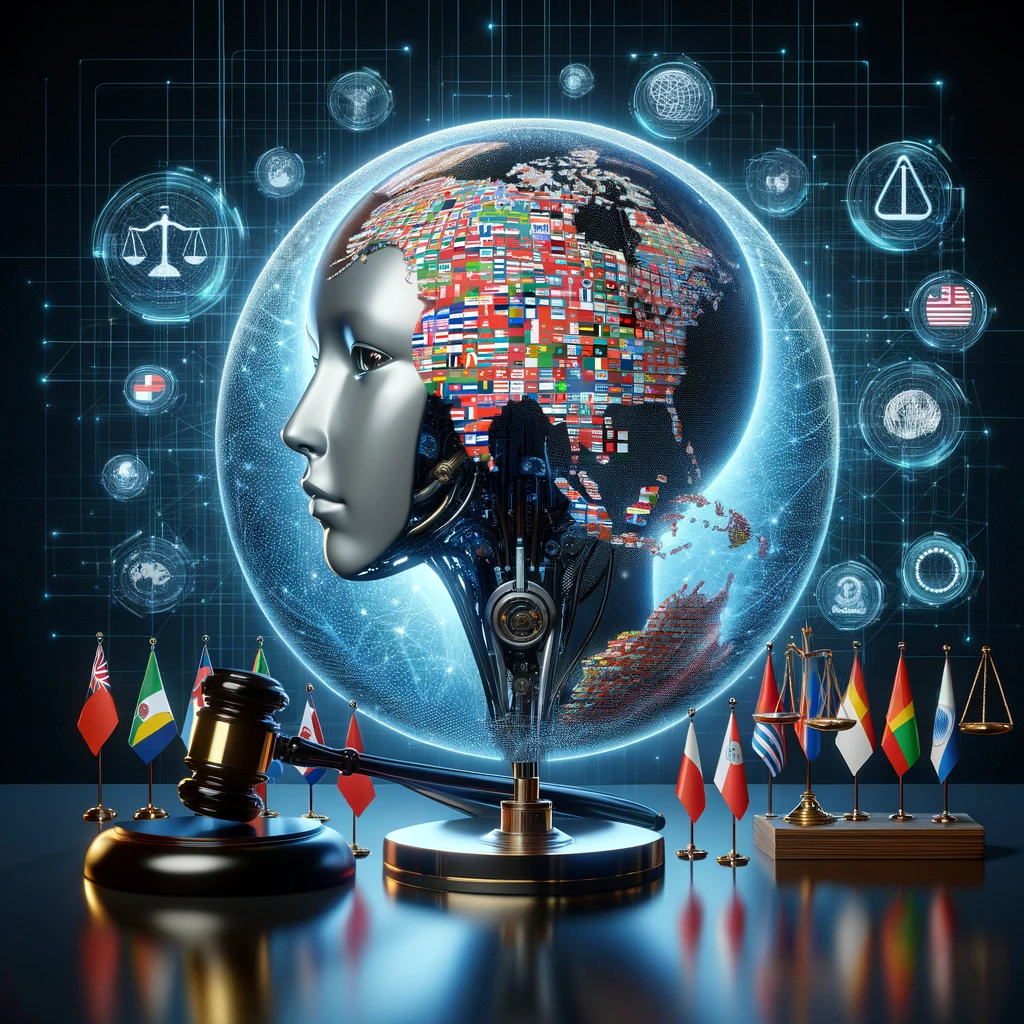
In the intricate dance of progress and regulation, the world stands at a pivotal juncture where the rapid evolution of artificial intelligence (AI) beckons a new era of technological prowess, while simultaneously summoning the vigilant eyes of global governance. This narrative unfolds against the backdrop of nations and international bodies racing against time and technology to craft laws that can keep pace with AI’s relentless advance.
Once upon a recent time, in the digital realms of innovation, AI tools like ChatGPT, backed by tech giant Microsoft, have been pushing the boundaries of what machines can do. These advancements, while awe-inspiring, have stirred a global movement, a race of sorts, where governments are the participants, and the finish line is a comprehensive framework to regulate AI.
From the land down under, Australia, we hear whispers of impending regulations, a proactive stance to shield the innocent, as the nation prepares to mandate search engines to draft codes that prevent the sharing and creation of child sexual abuse material by AI, including the nefarious deepfakes.
Across the seas, in the United Kingdom, a gathering of minds at the first global AI Safety Summit marked a “landmark achievement.” Here, leading AI developers and over 25 countries, including the U.S. and China, along with the European Union, pledged allegiance to the “Bletchley Declaration.” This historic document calls for a united front to establish a common approach to AI oversight. The UK, not to be outdone, announced a tripling of its funding to 300 million pounds for the “AI Research Resource,” a testament to its commitment to safe AI research.
In the East, China, a titan in technology, has already set the wheels in motion with temporary regulations. Service providers must now navigate security assessments and obtain clearance before unveiling mass-market AI products, a move that underscores the country’s readiness to collaborate on AI safety and contribute to an international governance framework.
The European Union, a mosaic of diverse nations, is inching closer to a consensus on the landmark AI Act, with lawmakers agreeing on the types of AI systems that will be deemed “high risk.” This act is a tapestry of regulations expected to be completed by December, a testament to the EU’s dedication to a balanced approach to AI innovation and regulation.
The narrative of AI regulation is not confined to the Western world. From the Land of the Rising Sun, Japan, to the historic cities of Italy and Poland, investigations into possible breaches by AI platforms are underway, signaling a global awakening to the implications of unchecked AI.
Even the United Nations has entered the fray, with Secretary-General António Guterres convening a 39-member advisory body to deliberate on the international governance of AI. This move, coupled with the U.S. launching an AI safety institute and President Joe Biden’s executive order on AI systems, underscores a universal quest for a harmonious coexistence with AI.
As this story of AI regulation unfolds, it is clear that the world is not merely reacting to the tide of AI but actively seeking to steer its course. The quest for balance between innovation and regulation, between the marvels of technology and the sanctity of human values, continues to be a tale of our times, a narrative that will shape the future of AI and its place in society.
 Consulting Research Services