
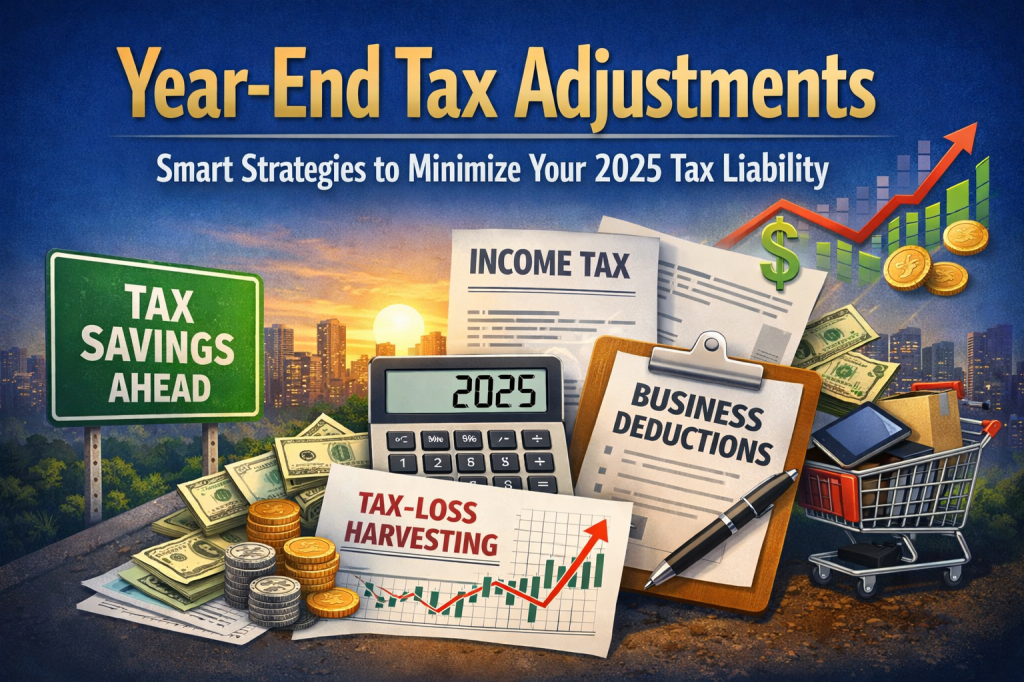
If no one is talking to you in December about tax strategy, you need a new accountant.
Now, I’m no accountant or tax expert.
I’m a normal human who doesn’t want to pay the government more than I have to.
Lucky for us, the tax code is designed to be abused as much as possible this time of year.
So, let’s discuss some of the year-end adjustments you need to make now…
Tax-Loss Harvesting: Turning Investment Losses into Tax Savings
One of the most straightforward ways to reduce your capital gains tax burden is through tax-loss harvesting. This involves selling underperforming investments in your taxable accounts before December 31, 2025, to realize losses that can offset gains from other assets sold during the year.
Here’s how it works: If your capital losses exceed your capital gains, you can use up to $3,000 of the excess to offset ordinary income (like wages or business profits), with any remaining losses carried forward to future years indefinitely.
For example, if you’ve profited from selling stocks, precious metals or real estate in 2025, harvesting losses from other holdings (maybe crypto) can neutralize those gains, potentially dropping you into a lower tax bracket.
Key Considerations for 2025:
Review Your Portfolio: Scan for unrealized losses in stocks, bonds, or mutual funds. Avoid the “wash-sale” rule, which disallows claiming a loss if you repurchase a substantially identical security within 30 days before or after the sale.
Prioritize Short-Term vs. Long-Term: Short-term losses (from assets held less than a year) first offset short-term gains, which are taxed at higher ordinary income rates. This can yield bigger savings.
Special Cases: This strategy applies to wagering losses too, where you can deduct them only up to the amount of your winnings. For businesses, consider losses from depreciated assets or inventory.
By acting now, you can lock in these benefits before the year closes.
Tools like robo-advisors or financial software can help identify opportunities but always align with your long-term investment goals.
Accelerating Business Expenses: Pulling Deductions into 2025
As a business owner, this one is my favorite.
For those of you not owning a business, reach out for a quick consult. This is a must have for every person, not just for someone who lives and breathes the business, but for side hustles, or growth opportunities. The tax benefits alone make it worth every single person to hold an LLC. It’s a no brainer.
For business owners, timing is everything when it comes to expenses. A classic year-end move is to accelerate deductible expenses into the current tax year (2025) while deferring income to 2026, if possible.
This reduces your taxable income now, kicking the can down the road to make continued adjustments for 2026 tax liability.
And this brings me back to my first question. If you hire someone to do your taxes, these are must-have conversations – and not days before the end of the year.
But throughout the year to ensure you are minimizing your tax liability as much as possible. This is a challenge that can save you or your company tens of thousands of dollars, if not hundreds of thousands, each and every year.
Effective Tactics to Implement Before Year-End:
- Capital Asset Purchases: Invest in equipment, vehicles, or technology that qualifies for bonus depreciation or Section 179 expensing. For 2025, you can deduct up to the full cost of qualifying assets placed in service by December 31, subject to limits. This is especially powerful for small businesses looking to upgrade operations.
- Prepay Expenses: Pay for next year’s supplies, rent, or insurance premiums in advance if your accounting method allows it (cash-basis taxpayers have more flexibility here). Just ensure the prepayment covers no more than 12 months to qualify as a current deduction.
- Research and Development (R&D) Credits: If your business incurs R&D expenses, note that domestic costs are fully deductible for 2025, and you may even amend prior returns for refunds.
- Other Deductions: Maximize contributions to retirement plans, health savings accounts, or charitable donations. For pass-through entities (like LLCs or S-Corps), evaluate the Qualified Business Income (QBI) deduction, which can shave up to 20% off your taxable income.
Additionally, review your entity structure (e.g., C-Corp vs. pass-through) and accounting methods for potential switches that could yield savings.
Wrapping Up: Act Now for a Smoother Tax Season
With just days left in 2025, these adjustments—tax-loss harvesting and accelerating expenses—can make a significant difference in your bottom line.
At CRS365, we’re here to help businesses like yours navigate these complexities with our optimization and automation expertise.
Whether it’s streamlining your financial processes or advising on strategic decisions, proactive planning pays off.
Don’t wait until April 2026 to regret missed opportunities. Reach out to a tax advisor today, and let’s make 2025 end on a high note.
For more insights on business efficiency and financial strategies, stay tuned.
CRS365 Team,
Happy New Year!
 Consulting Research Services